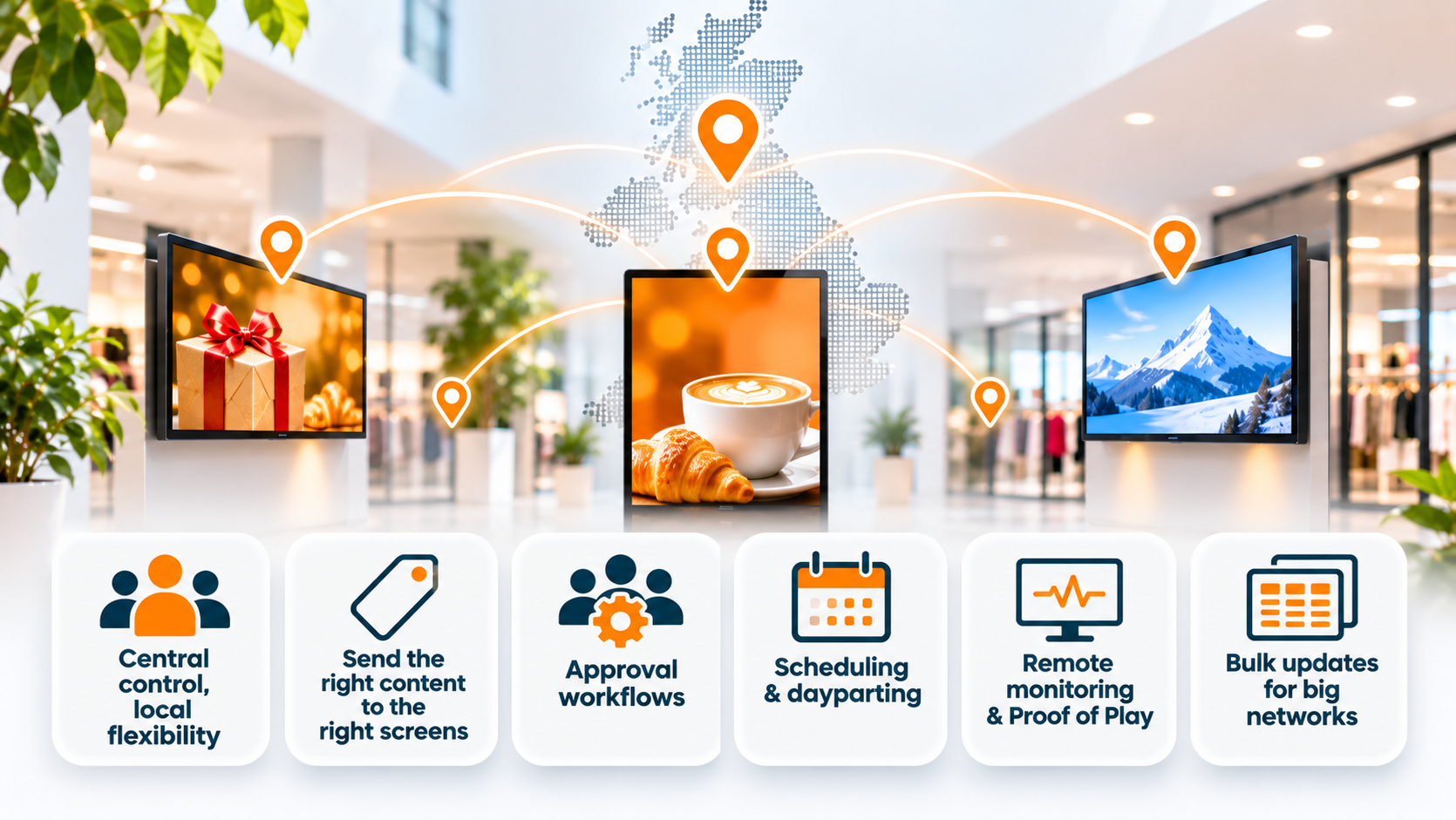
What is Digital Signage?
Digital signage is a type of signage that uses a screen, LCD, LED and projection technology to display media such as images and video. Digital signage can be found in shops, restaurants, hotels, universities and many buildings that we pass through daily.
Recent developments in digital signage have taken a more interactive approach through technologies such as cameras and sensors. Integrating 3rd party hardware and apps will create a more engaging user experience.
The following are just a few noteworthy examples of how businesses and organisations are making use of digital signage. If you own a business, you might consider using digital signage in similar ways.
1. Sensor Technology/RFID tags – Lift and Learn/Place and Learn
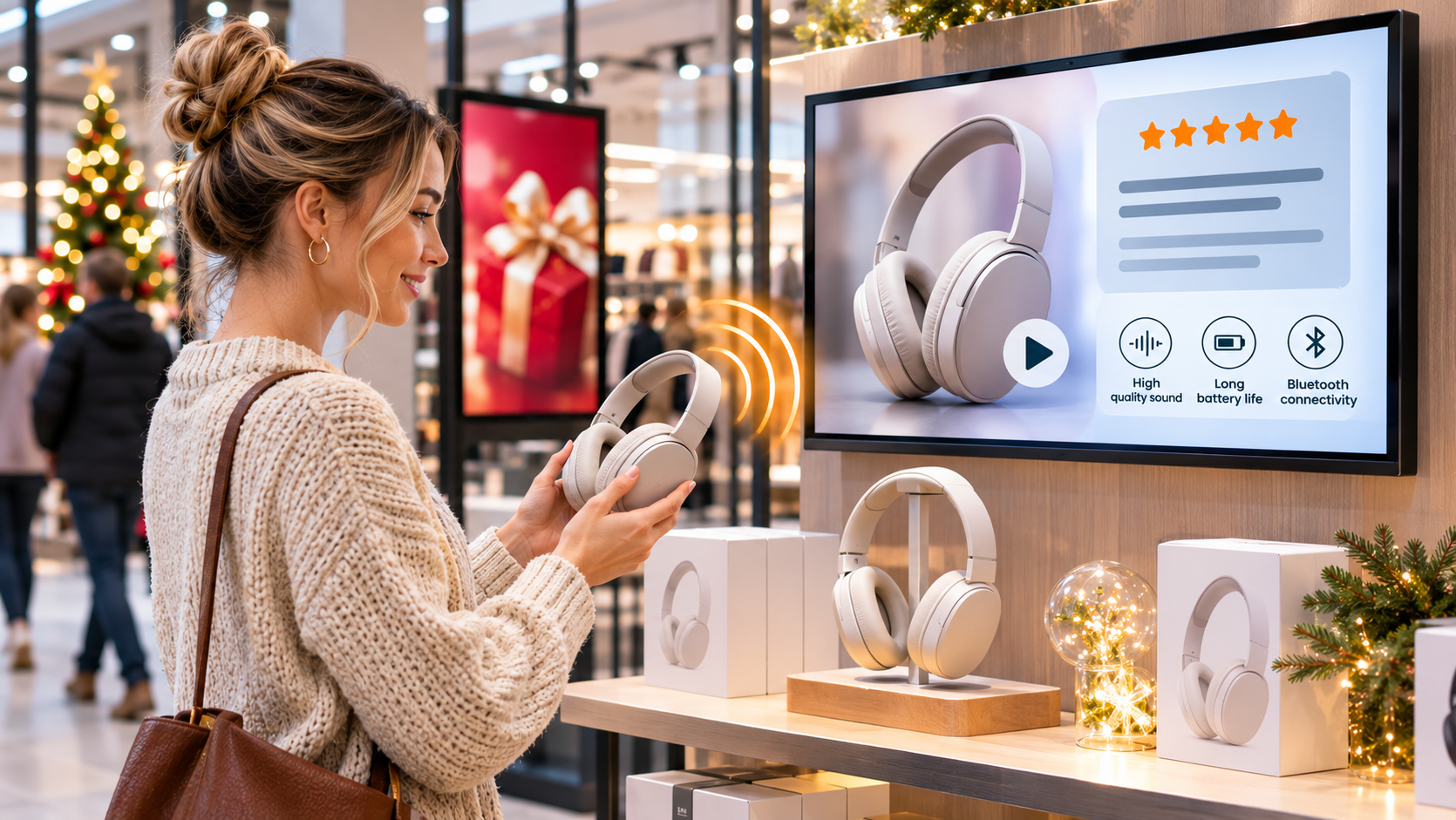
The Lift and Learn/Place and Learn technology is an interactive experience where the content on the screen changes whenever someone physically picks up a product. All the detail about the product is displayed clearly on the screen, instead of the customer having to pore over the small print on the packaging.
A unique RFID tag (a special electronic label) is attached to the base of each product involved in the experience. This allows the digital signage device to detect when a product is lifted from a pad or placed onto it, and these events can trigger changes in the content.
The interactivity and on-screen information help customers make an instant decision to purchase a product. One of the great features of using sensor technology is that retailers can track the interaction with any product so, every time someone is examining it or looking at it, they lift it up or place it on the pad you know that the product has had some interest in. The digital signage device can record the interactivity data and this information is available to the retailer.
2. QR Code’s and E-commerce
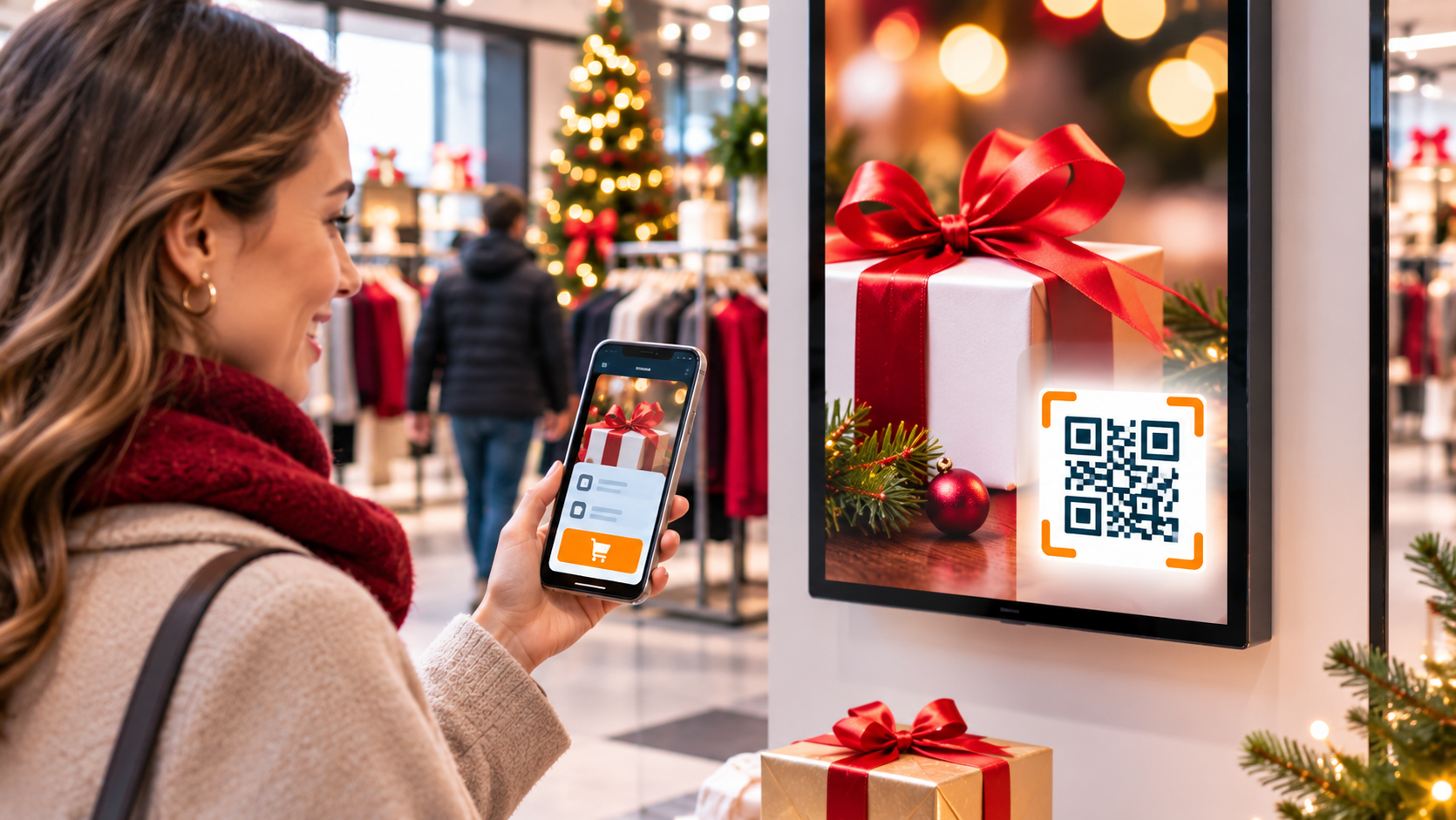
Retailers have been experimenting with having 24/7/365 window shopping, letting customers take over that window screen and transact. For example, a person waiting in a queue or approaching a closed store would see an on-screen QR code with a call-to-action asking people to scan the code for more information, once scanned, the user would be directed to a webpage on their mobile device showing the products on offer or more information.
If the user then selected a product on their mobile device, the content on the screen would automatically change to show a deal specifically for the chosen product. Imagine if your company was closed and your customers could still browse your special offers or promotions. One of the great features of using this technology is that you can connect this to your online e-commerce site and the user can get the product delivered straight to their home.
3. Back-end Systems
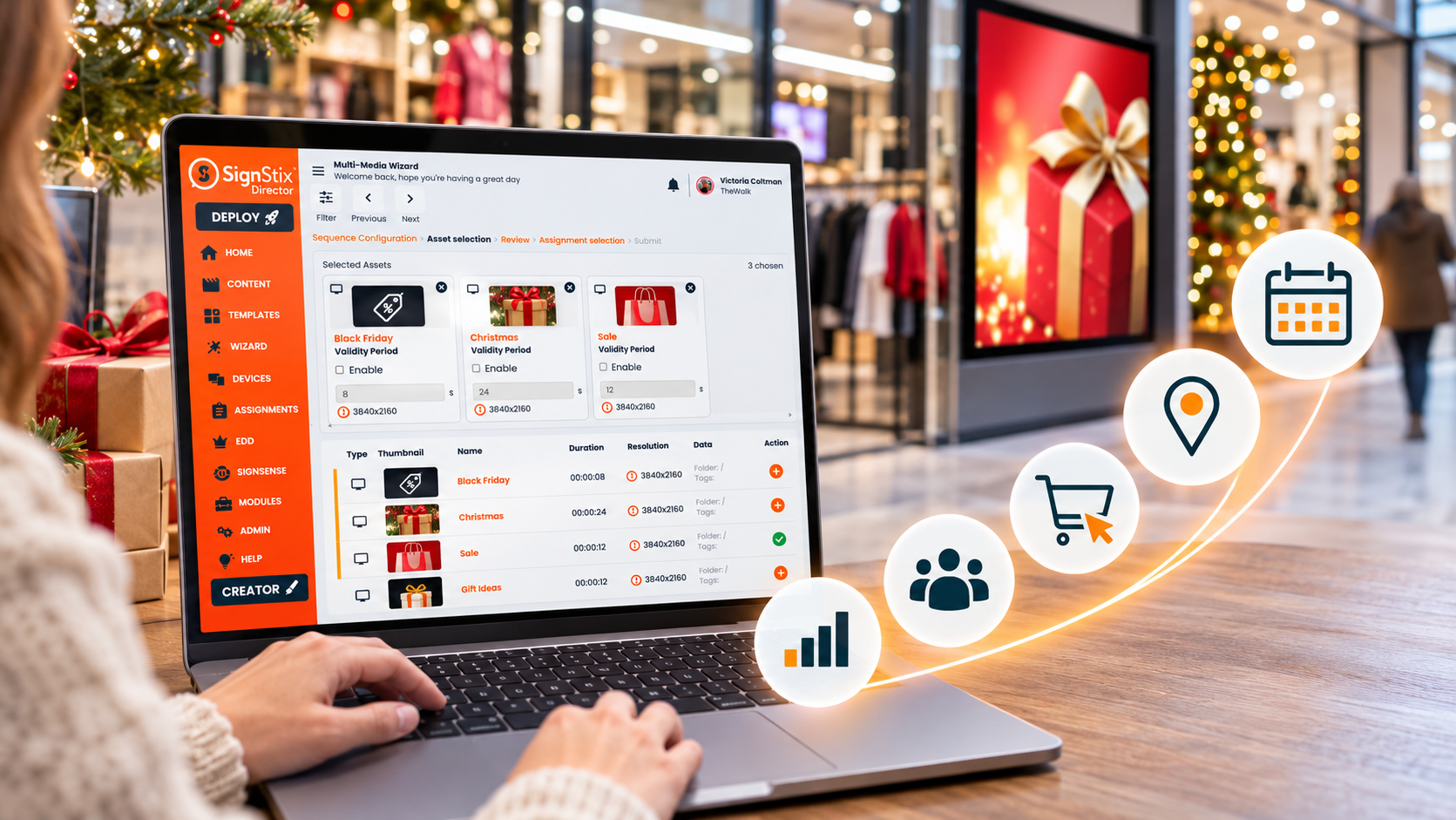
Integration with back-end systems can help with stock control by pushing certain SKU’s where there is a surplus for meeting in-store sales targets. Launch exclusive new products for a limited time only or share seasonal offers and as a result, will encourage an influx of sales.
4. Weather Triggers
The change in weather can trigger a price promotion or seasonal offer. For example, a drop in temperature could change the sign to coats and jumpers or an increase in temperature could change content to switch to the promotion of summer dresses.
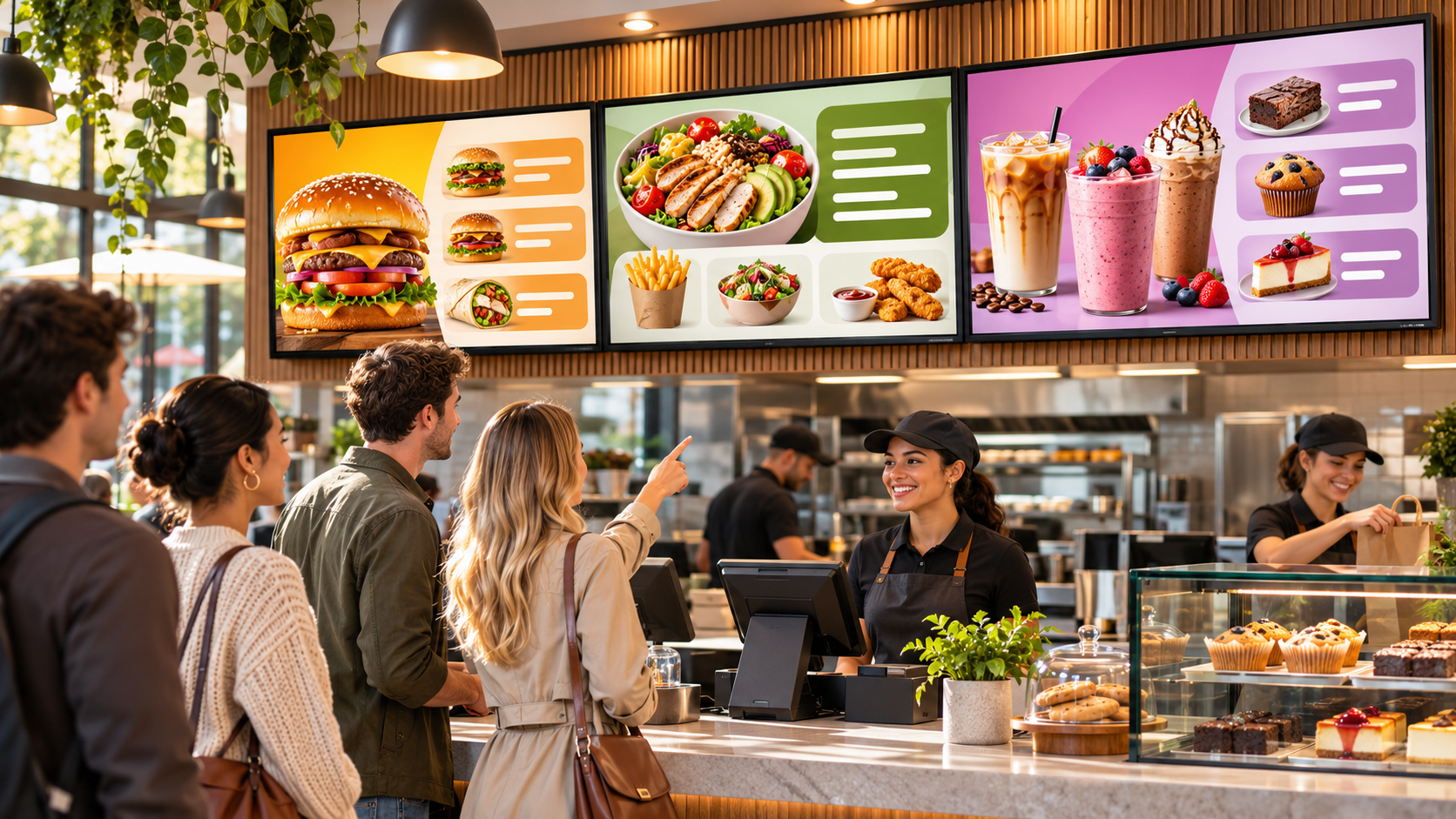
This technology is also used well in the quick-service restaurant and the hospitality industry using digital menu boards.
5. Camera Detection and Email Triggers
Signage located near entrances can be triggered when someone approaches the screen via a third-party camera and it can convey specific information about mask requirements, one-way systems, social distancing guidelines and other policies. If policies change, the network can be updated in real-time to reflect those changes. In addition, that information can be pushed out to staff via email and signage in a break or staff rooms and employee-only areas can help communicate updates, therefore preventing employees and customers from exposure to unnecessary risks.
6. Multiple Software Platforms
Locations such as
warehousing and manufacturing are ideal locations for digital signage. In these types of environments, digital signage can be used to inform operatives pending job queues, material preparation and manufacturing instructions as it has been proven to increase the factory throughput by 30%*.
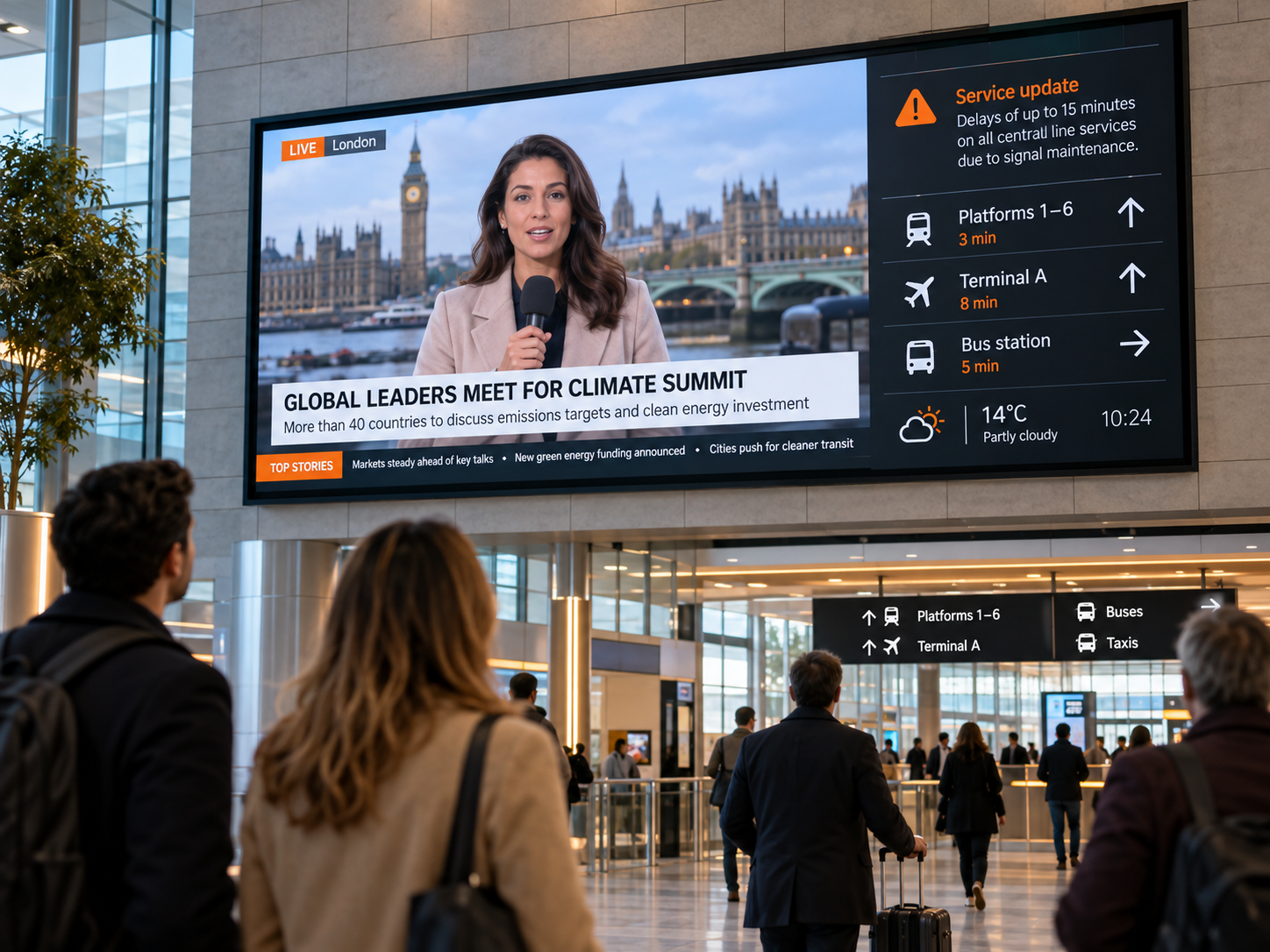
Multiple software platforms can be integrated with digital signage platforms to display vital delivery information onto a single screen. For example, a supermarket’s internal ‘Delivery Hub’ application can be integrated with digital signage technology, resulting in a hybrid system featuring live telematics integrations, internal live data feeds and real-time content updates.
7. Lighting, SMS alerts and Alarm Systems
Connect all of your workplace devices to make real-time business decisions on your behalf – so as soon as something happens, your environment will adapt in the blink of an eye. For example, coordinate the safe evacuation of staff with automated announcements, adaptive lighting, SMS alerts and digital signage that automatically updates with building directions, prompted from the signal of any alarm or emergency switch.
8. Meeting Room System
Check-in to your meeting room upon arrival, to secure your booking. Automatically free up rooms if no one arrives. Adapt lighting and room temperature, or order drinks from the comfort of your seat – all using a custom interactive control panel connected to a digital signage platform.
9. Multisensory
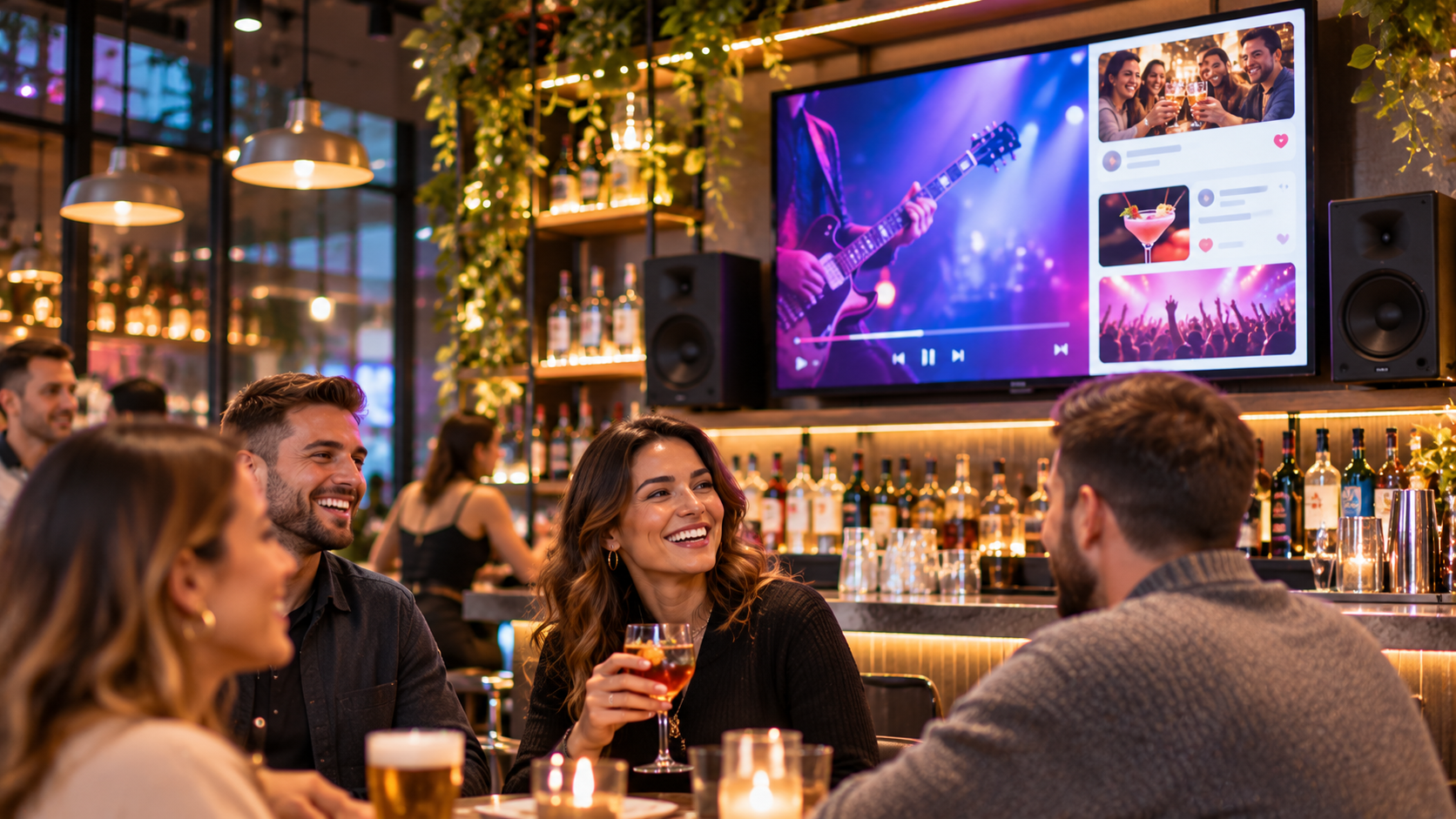
Adding third-party hardware such as a music system gives a multisensory experience that will differentiate your business from others. For example, integrating a SONOS music system can present customers with ‘Now Playing’ track information, such as artist and title, as well as the album artwork. ‘Previously Played” and ‘Next to Play’ is also visible on the digital signage screens – a truly multisensory experience.
Now imagine the potential of running promotions throughout the playlist!
Industries Served by SignStix
SignStix can deliver across a range of sectors including retail, corporate communications, industrial operations, logistics, DOOH, healthcare, education and the hospitality industry, making it a truly flexible digital signage solution and why it is used by some of the world’s biggest brands to deliver truly engaging digital signage campaigns, interactive experiences and automated communications.
Integrating the above 3rd party technology was made possible via the SignStix JavaScript extensions and API.